Inside an APNA Community Camp
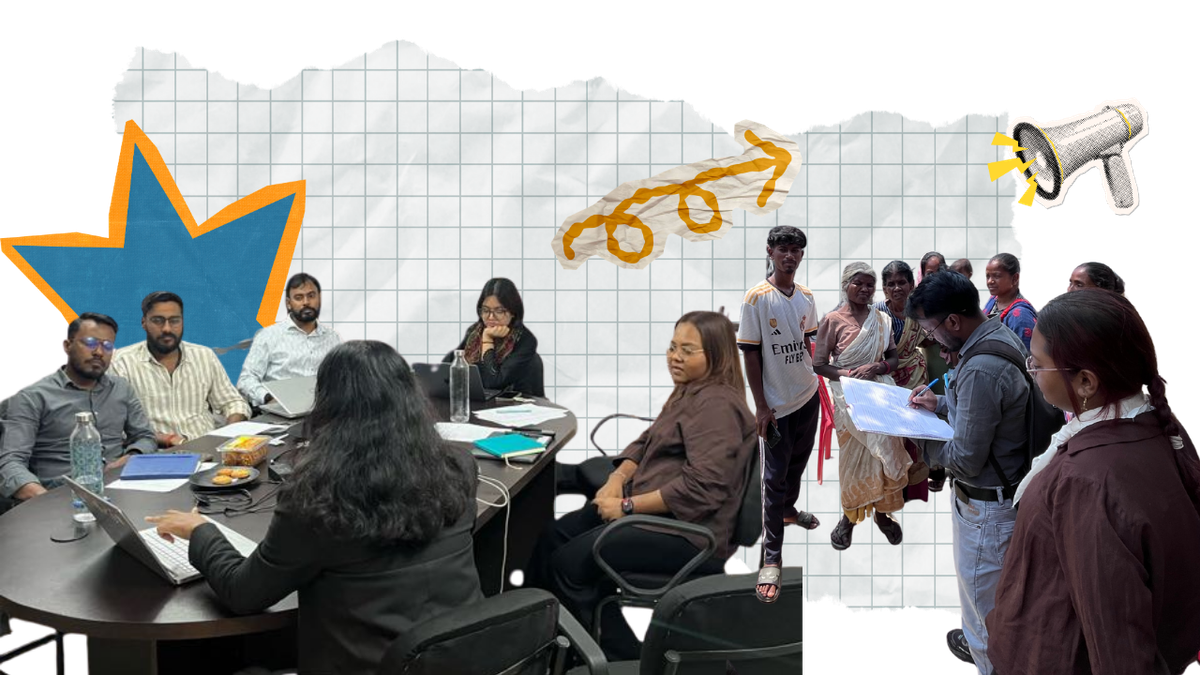
30 May, 2026| The days leading up to the camp are always busy and vibrant at the office. The team is constantly up and about, making calls, coordinating with officials, collecting permissions, arranging refreshments, and making sure everything is in place before the camp begins. Banners are printed and put up across the basti, APNA brochures and pamphlets are distributed, and presentations are prepared carefully. Projectors and microphones are checked again and again to make sure they work properly.
Early in the morning on the day of the camp, the team gathers at the office before leaving together for the basti. The drive to the basti is often filled with discussions about the day ahead, about the people we might meet, and the issues that residents may want to talk about.
As soon as we arrive, slowly people begin gathering around. Camps always have a mix of people. There are residents we have known and worked with for years, people who greet us warmly because they already know the team and the work we do. Then there are the curious newcomers, standing at a distance at first, wondering who this group of people making all this noise in the basti are. And of course, there are always children around, running between the chairs, peeking into the presentations, and happily becoming part of whatever is happening around them.
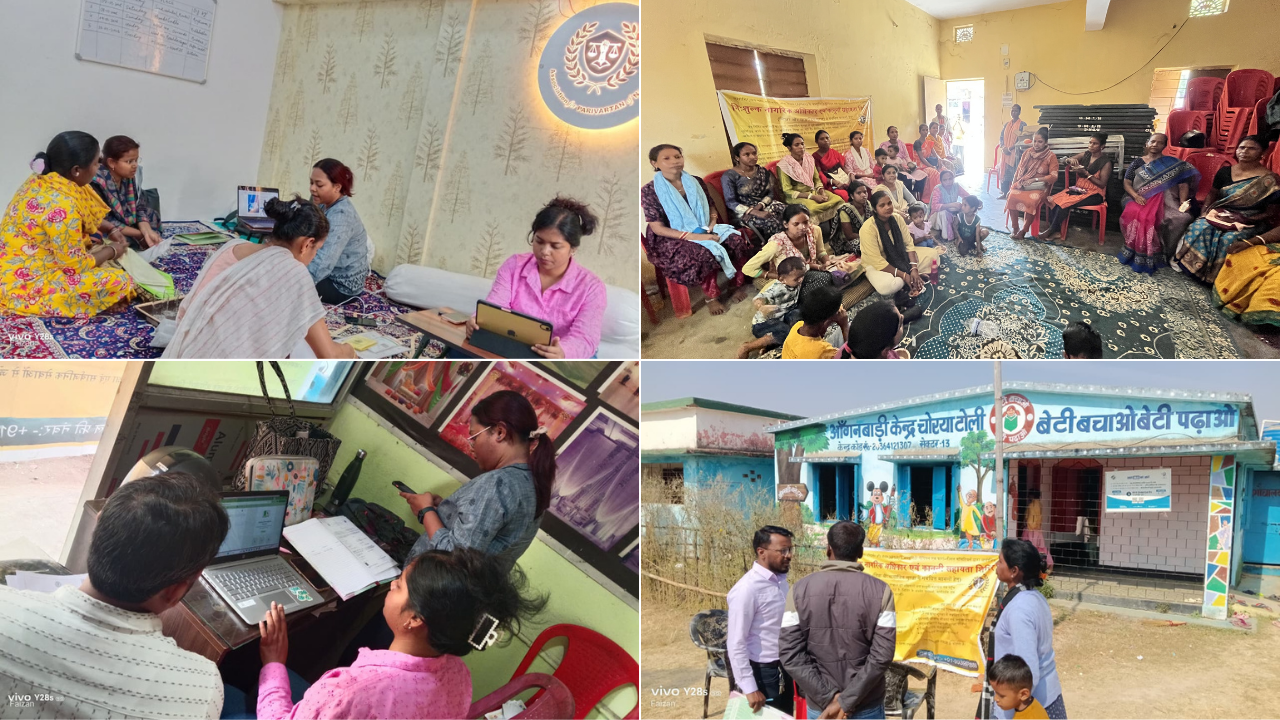
Once the camp begins, we host presentations about welfare entitlements, the rights people are entitled to, and the government schemes that are available to them. We speak about pensions, insurance schemes, education-related benefits, identity documents, and other welfare programmes that many residents either do not know about or struggle to access. We also explain what documents are required, how applications work, and what benefits they are owed under different schemes.
The presentations are rarely one-sided. Almost always, they are followed by questions from residents. Sometimes the questions are simple, about documents or eligibility. Sometimes they are much larger, about housing insecurity, lack of access to healthcare, school admissions, or problems with government offices. The team is always happy to answer these questions, because these conversations are often where trust begins. People slowly start opening up about the difficulties they face every day, and the camp becomes more than just a presentation. It becomes a space for discussion.
While tea and refreshments are being passed around, the camp settles into a comfortable chatter, a soft space to slow down and discuss. Small groups begin forming. Some residents discuss issues amongst themselves, while others come directly to us to talk. People share stories about problems with documentation, delayed pensions, sudden medical expenses, demolitions, lack of stable work, or struggles related to their children’s education. Many of these conversations continue long after the presentations are over.
We sit with residents, listen to them carefully, and wherever possible, note down their details so that we can follow up later. For some households, this becomes the beginning of a long-term relationship with APNA. Over time, these households become part of the families we continue working with closely, helping them navigate welfare systems, documentation processes, and access to basic rights and entitlements.
The camps are not only about spreading awareness. They are also about building familiarity and trust. For many residents, especially those who have repeatedly faced neglect or exclusion, simply having a space where someone listens patiently can matter deeply. Over time, the camps become spaces where people feel comfortable returning, asking questions, and discussing concerns openly.
As the sun slowly starts to set, the groups begin to fizzle out. Some residents head back home, while others stay behind for one last conversation with the team. Even after most people have left, a few households usually remain, wanting to discuss something privately or ask one final question before we leave. The team stays back for as long as needed, listening and speaking with anyone who wishes to talk.
Eventually, it is time to pack up. The brochures are gathered, the banners are taken down, the chairs are stacked away, and the microphones and projectors are packed carefully back into their boxes. Tired but satisfied, the team heads back to the office. And by the time we return, conversations about the next camp have already begun.
Author | Sapna Gupta